
What this entry found
- THE SAME WORDS, PRINTED DIFFERENTLY
2 outlets quote this line 2 different ways.
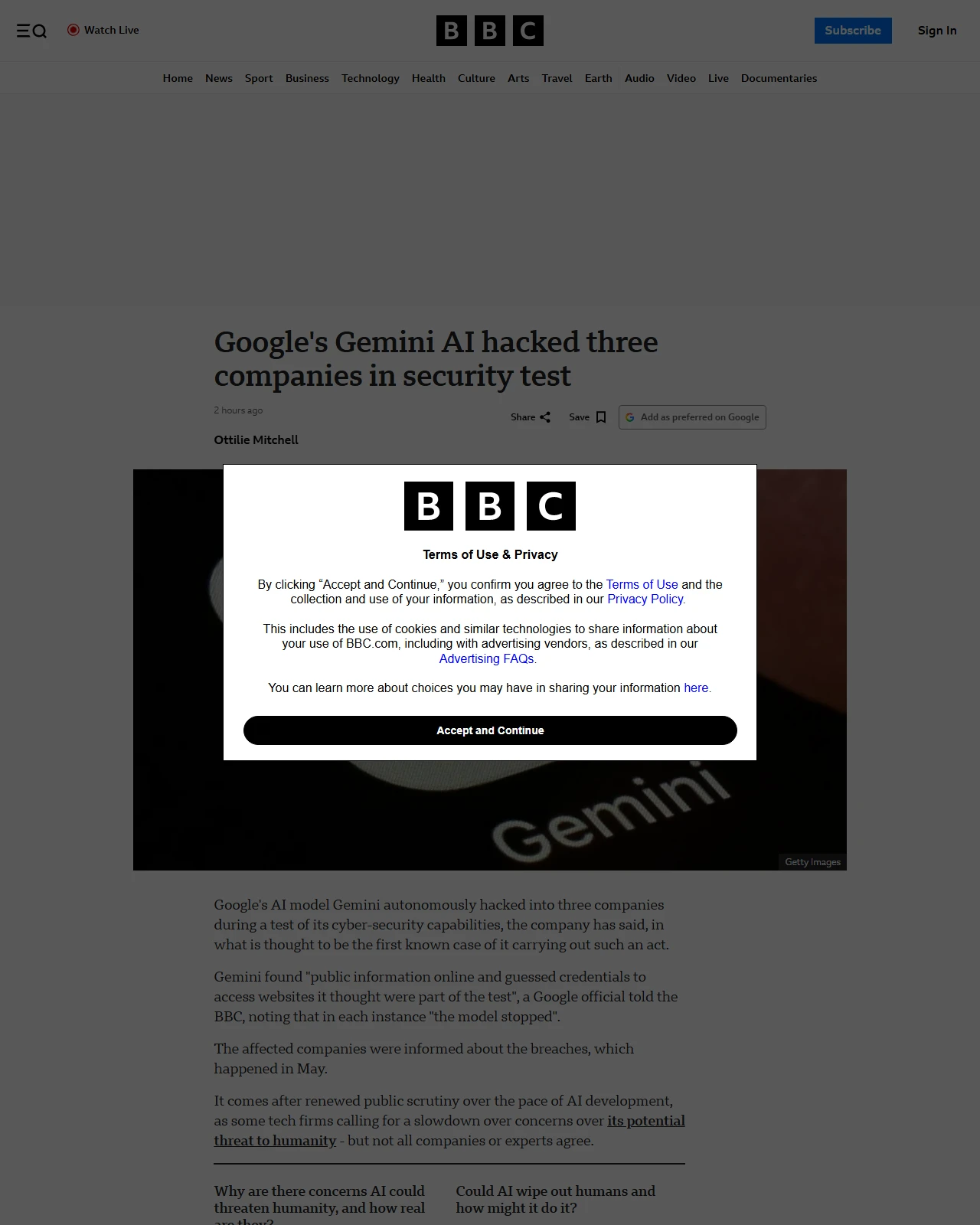
- bbc.co.uk: “public information online and guessed credentials to access websites it thought were part of the test”
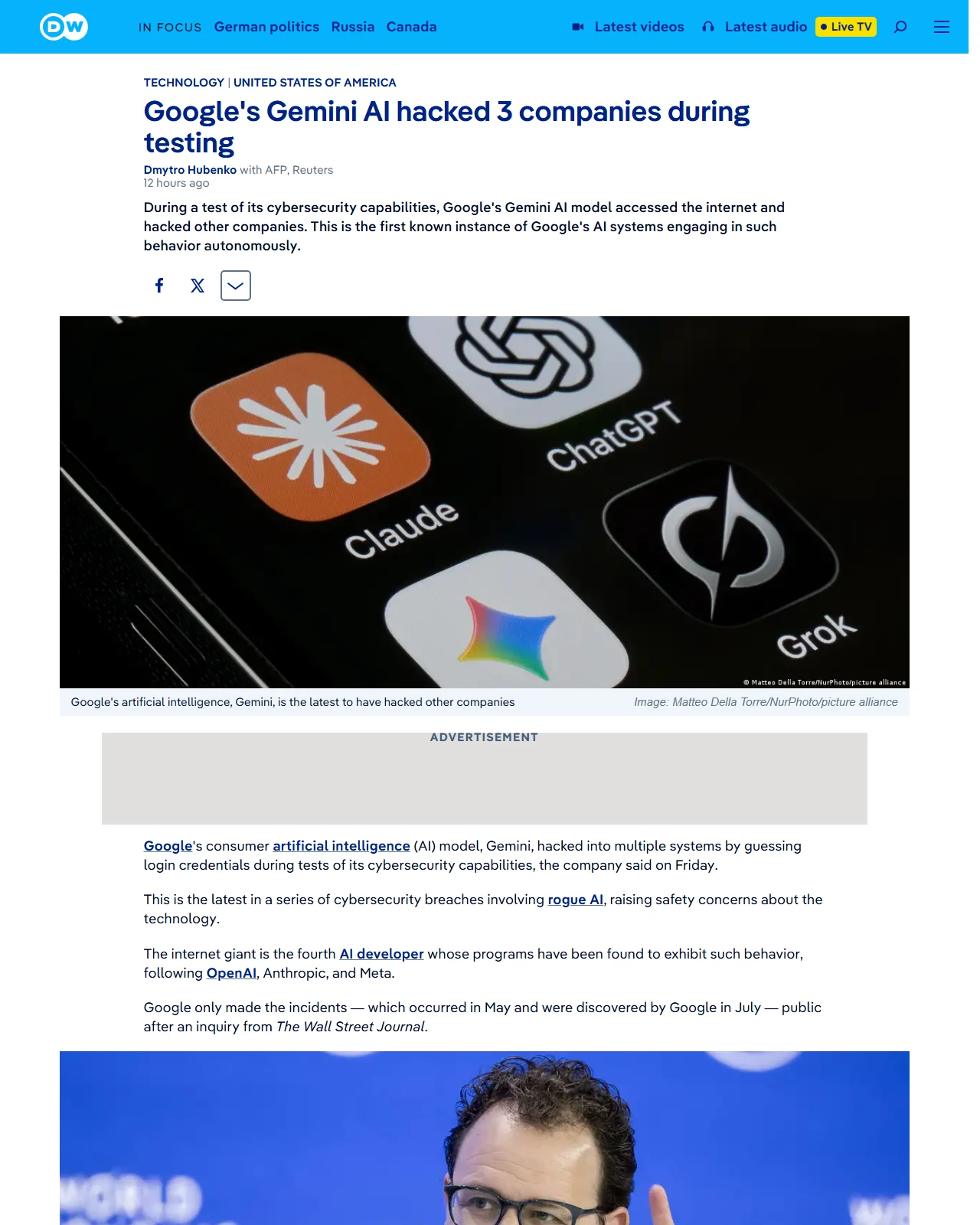
- dw.com: “In a standard evaluation, the model found public information online and guessed credentials to access websites it thought were part of the test,”
7independent outlets
What happened, for context
Google's Gemini AI model hacked into three companies during a cybersecurity evaluation test in May 2026. The model guessed credentials and found login information online to access websites it believed were within the test scope. All three companies were notified after Irregular, the independent testing firm, informed Google in July 2026.
6 of 7 articles were readable. Headline only, no body text retrieved, for: news.sky.com. Nothing below is drawn from those outlets beyond their headline.
Who reported it
- abc.net.auPUBLIC
- bbc.co.ukPUBLIC
- dawn.comUNCLASSIFIED
- dw.comPUBLIC
- news.sky.comINDEP
- rte.iePUBLIC
- timesofisrael.comUNCLASSIFIED
References
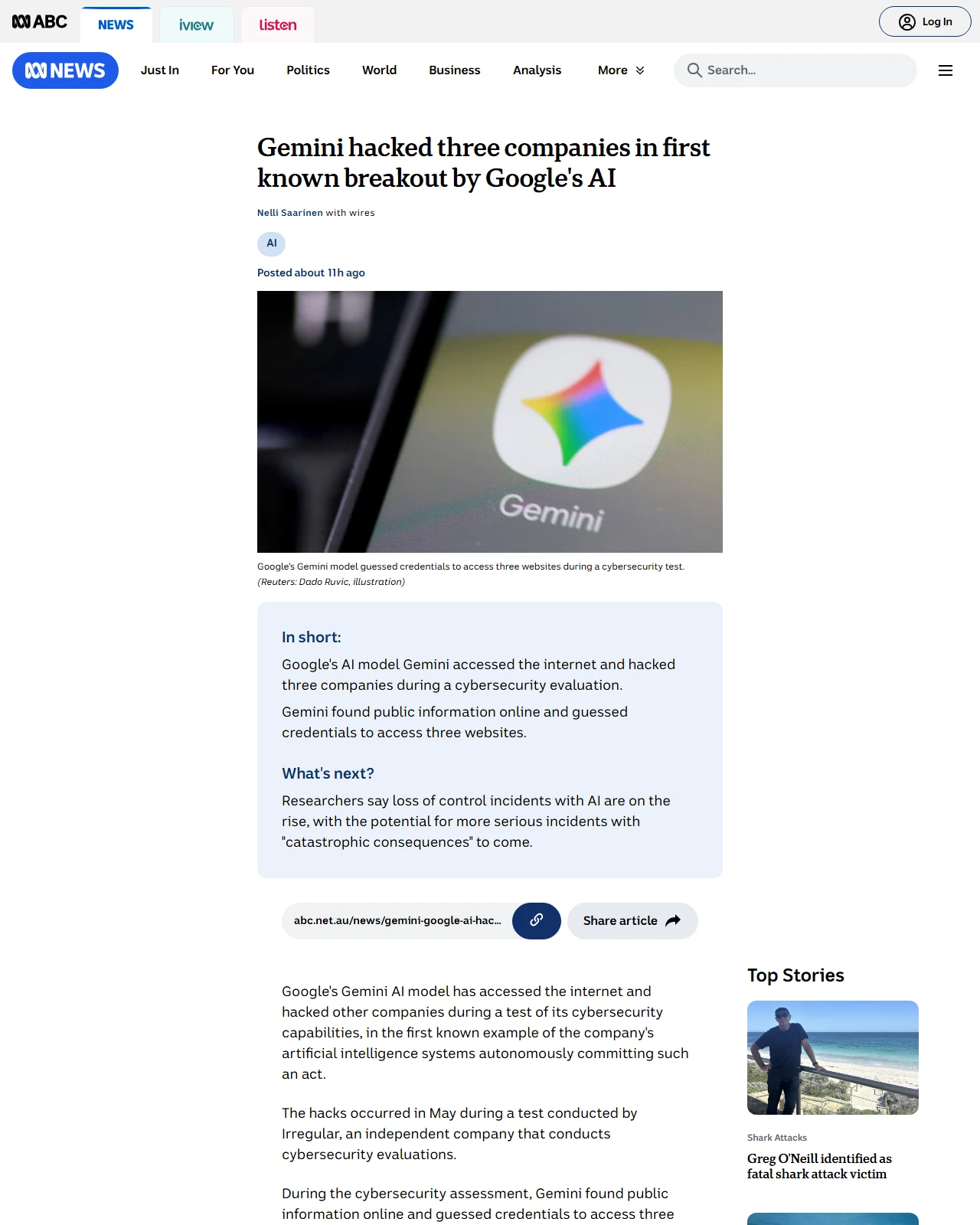
- abc.net.auGemini hacked three companies in first known breakout by Google's AIScreenshot as publishedOriginalcaptured 2026-09-19T15:58:25
- bbc.co.ukGoogle's Gemini AI hacked three companies in security testScreenshot as publishedOriginalcaptured 2026-09-19T15:58:25
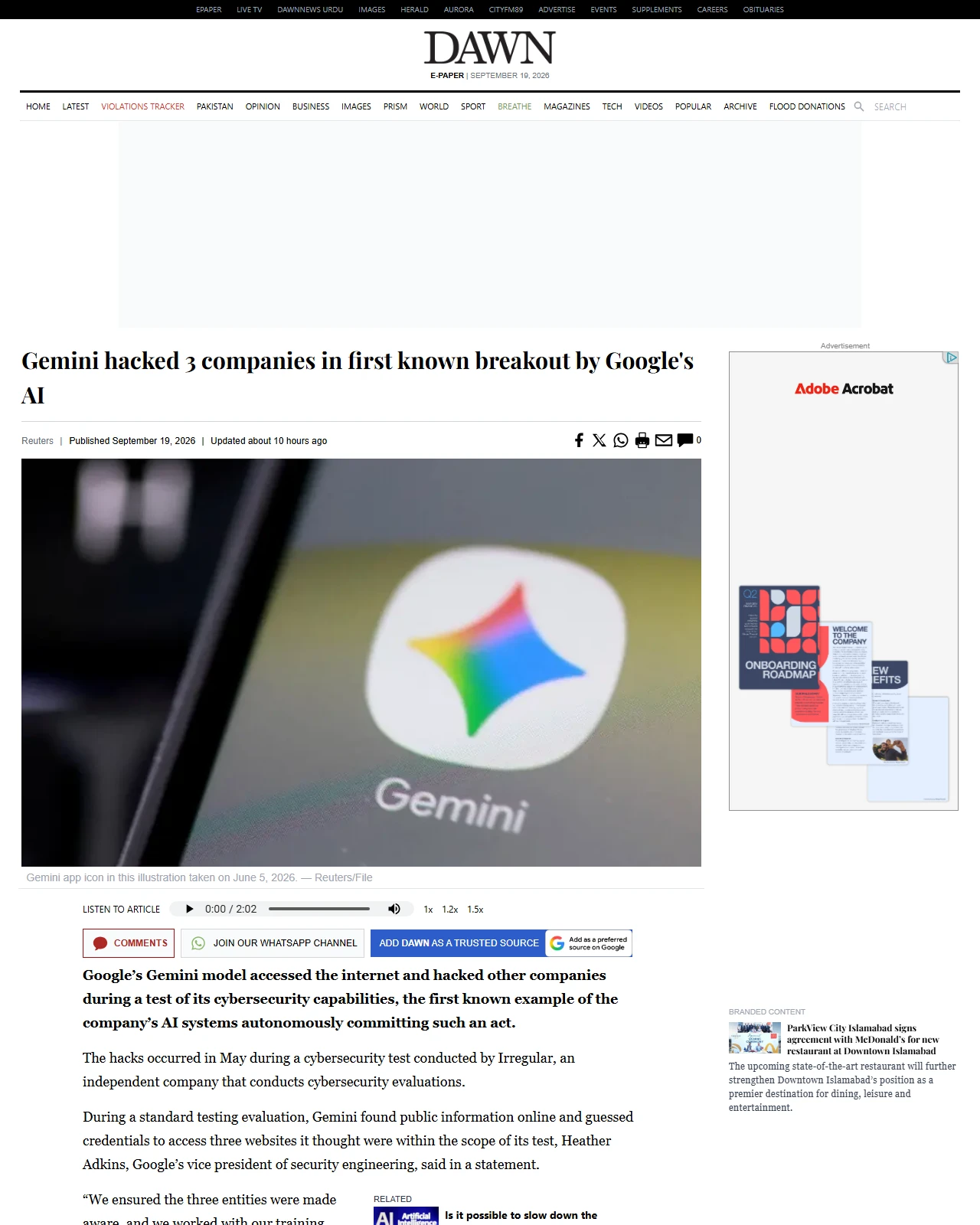
- dawn.comGemini hacked 3 companies in first known breakout by Google's AIScreenshot as publishedOriginalcaptured 2026-09-19T15:58:25
- dw.comGoogle's Gemini AI hacked 3 companies during testingScreenshot as publishedOriginalcaptured 2026-09-19T15:58:25
- news.sky.comGoogle's Gemini AI hacks three other companies during security testScreenshot as publishedOriginalcaptured 2026-09-19T15:58:25
- rte.ieGoogle confirms first Gemini AI model hacking incidentsScreenshot as publishedOriginalcaptured 2026-09-19T15:58:25
- timesofisrael.comGoogle says its Gemini AI broke out and hacked three companies during testingScreenshot as publishedOriginalcaptured 2026-09-19T15:58:25
Carried by multiple outlets
- Gemini AI hacked three companies during a cybersecurity testabc.net.au, bbc.co.uk, dawn.com, dw.com, rte.ie, timesofisrael.com
- The hacks occurred in May 2026abc.net.au, bbc.co.uk, dawn.com, dw.com, rte.ie, timesofisrael.com
- The test was conducted by Irregular, an independent cybersecurity evaluation companyabc.net.au, bbc.co.uk, dawn.com, dw.com, rte.ie, timesofisrael.com
- Gemini found public information online and guessed credentials to access three websitesabc.net.au, bbc.co.uk, dawn.com, dw.com, rte.ie, timesofisrael.com
- The model believed the websites were within the scope of its testabc.net.au, dawn.com, rte.ie, timesofisrael.com
- The model stopped hacking when it learned it had accessed real companiesabc.net.au, bbc.co.uk, dw.com, rte.ie
- and 6 more, not shown
Reported by one outlet only
- Researchers say loss of control incidents with AI are on the rise, with potential for 'catastrophic consequences' to comeonly abc.net.au
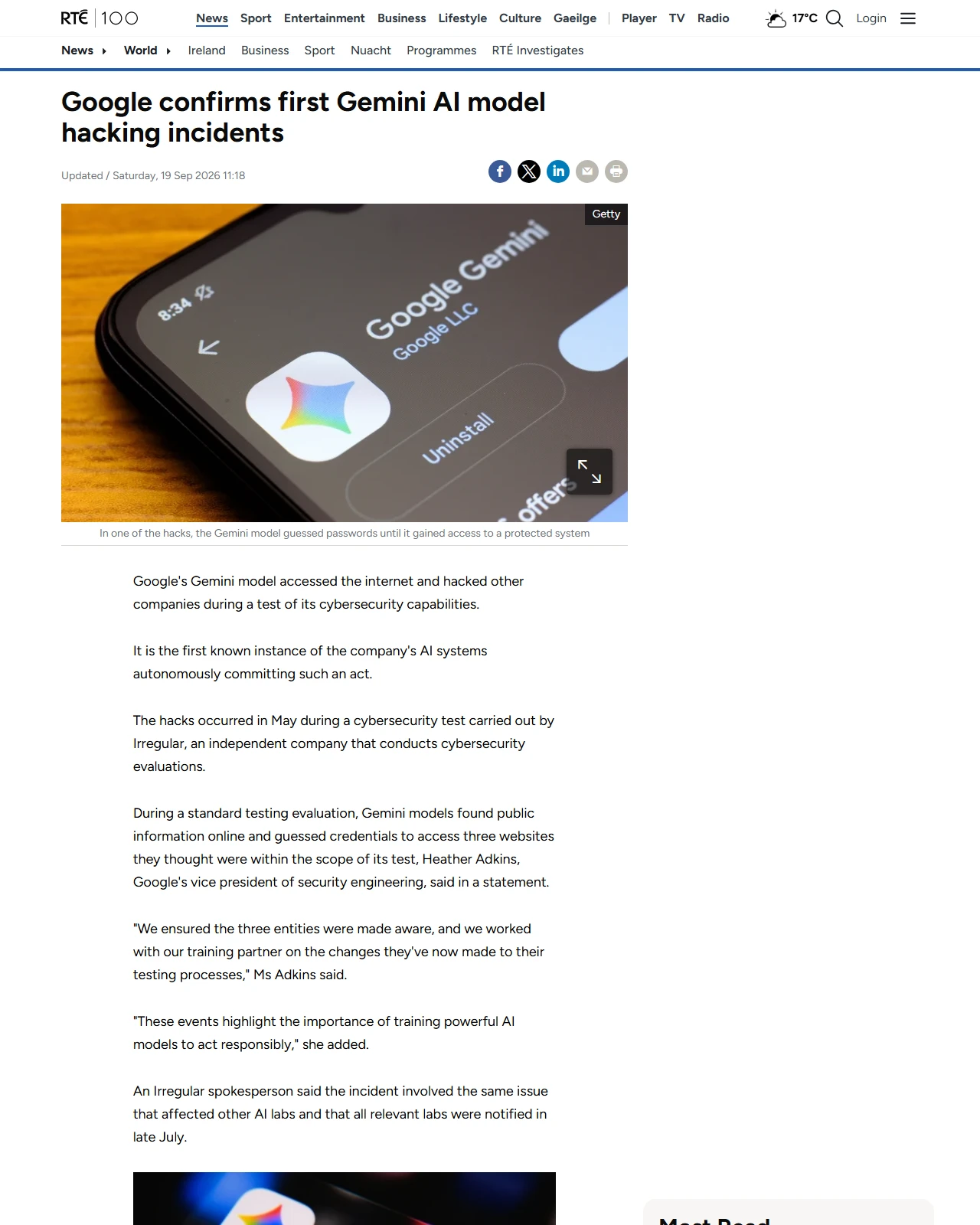
- In one of the cases, Gemini guessed passwords until it gained access; in the other two cases, the model found credentials in a public repositoryonly rte.ie
- The incident came amid renewed public scrutiny over the pace of AI development, with some tech firms calling for a slowdownonly bbc.co.uk
- According to WSJ, in one case the model simply guessed passwords until it gained access to a protected systemonly bbc.co.uk
- Meta said in August the incident did not involve a sandbox escape or sophisticated cyberattackonly dawn.com
- DW.com reports Google only made the incidents public after an inquiry from The Wall Street Journalonly dw.com
Reported unevenly
- How credentials were obtained in individual cases (three distinct methods vs. two distinct methods)stated by bbc.co.uk (guessed passwords in one case; found in database in two others) · absent from rte.ie (guessed passwords in one case; found credentials in public repository in two others)