What this entry found
- ONE SOURCE, MANY MASTHEADS
4 outlets carried this. They resolve to 3 independent sources.
A reader sampling these outlets received 3 accounts, not 4.
- ONLY ONE OUTLET HAD THIS
apnews.com carried 4 details no other outlet reported.
- Susan Collins said 'I did not see the inflation progress I was hoping to see' and referenced geopolitical developments on the energy side
- Collins expects the Fed will keep rates unchanged next year
- Collins penciled in a second rate hike for later this year
- Susan Collins, president of the Federal Reserve Bank of Boston, supported the rate hike
4outlets→3independent
What happened, for context
Federal Reserve officials outlined reasoning for a recent quarter-point interest rate increase, citing persistent inflation and geopolitical developments. Officials discussed whether inflation pressures stem from supply shocks (such as the Iran war) or from stronger underlying demand, with implications for the intensity of future rate actions.
3 of 4 articles were readable. Headline only, no body text retrieved, for: noradarealestate.com. Nothing below is drawn from those outlets beyond their headline.
Who reported it
- apnews.comWIRE
- pbs.orgPUBLIC
- ft.comINDEP
- noradarealestate.comUNCLASSIFIED
References
- apnews.comFederal Reserve official says inflation persistence led her to support interest rate hikeScreenshot as publishedOriginalcaptured 2026-09-22T16:51:52
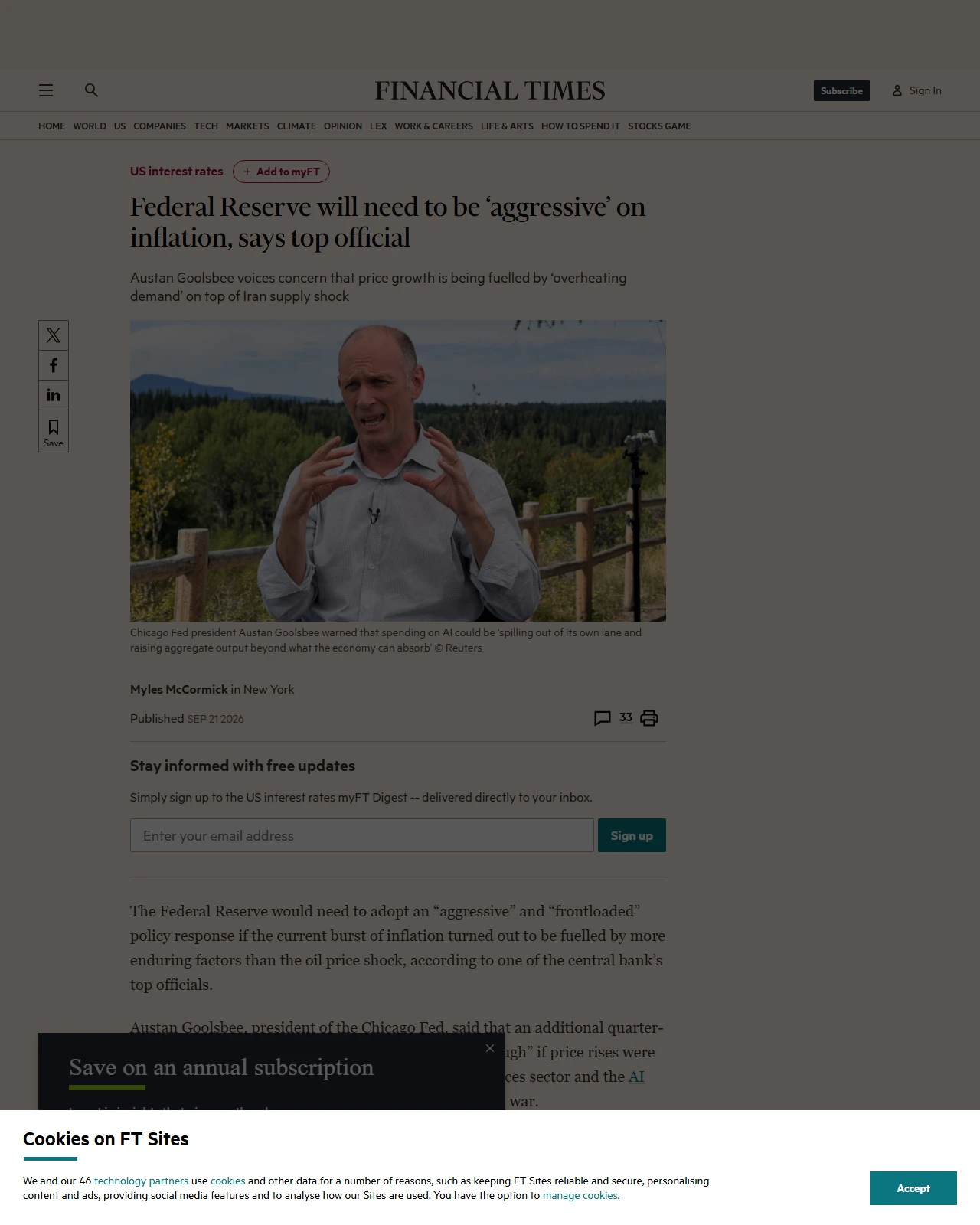
- ft.comFederal Reserve will need to be ‘aggressive’ on inflation, says top officialScreenshot as publishedOriginalcaptured 2026-09-22T16:51:52
- noradarealestate.comFederal Reserve Interest Rate Predictions for 2026Screenshot as publishedOriginalcaptured 2026-09-22T16:51:52
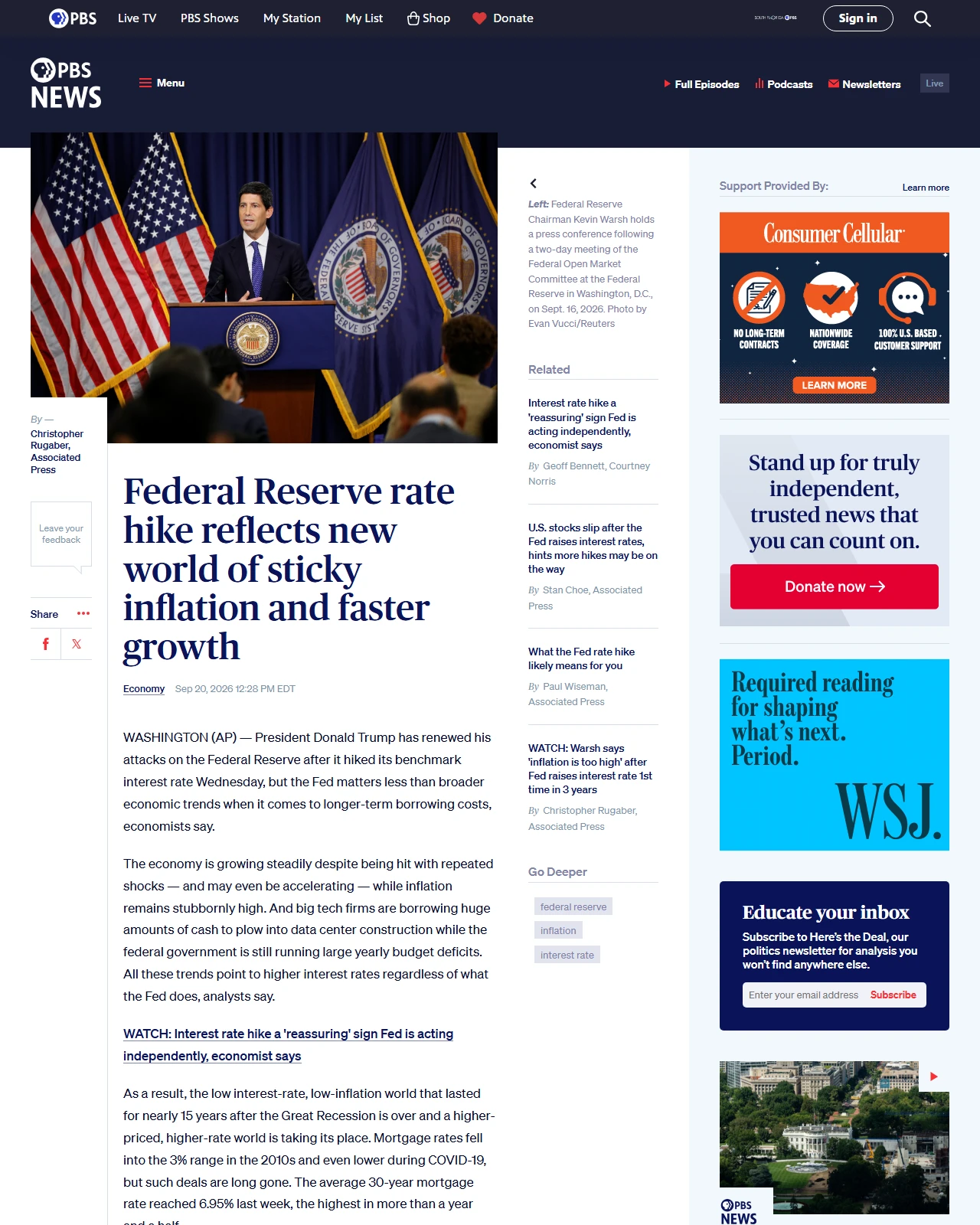
- pbs.orgFederal Reserve rate hike reflects new world of sticky inflation and faster growthScreenshot as publishedOriginalcaptured 2026-09-22T16:51:52
Carried by multiple outlets
- The Federal Reserve raised its benchmark interest rate by a quarter-point last week (described as Wednesday in the week of publication, week of September 15–21, 2026)apnews.com, ft.com, pbs.org
- Austan Goolsbee, president of the Chicago Fed, spoke to reporters on Monday about Federal Reserve policyapnews.com, ft.com
- Inflation remains stubbornly high and has not hit the Federal Reserve's 2% target for more than five yearsapnews.com, pbs.org
- Federal Reserve officials cited geopolitical developments, specifically the Iran war or conflict in the Middle East, as contributing to inflation pressuresapnews.com, ft.com
Reported by one outlet only
- Susan Collins said 'I did not see the inflation progress I was hoping to see' and referenced geopolitical developments on the energy sideonly apnews.com
- Collins expects the Fed will keep rates unchanged next yearonly apnews.com
- Collins penciled in a second rate hike for later this yearonly apnews.com
- Goolsbee said a quarter-point rate increase 'likely would not be enough' if inflation is driven by overheating demand rather than supply shocksonly ft.com
- Goolsbee stated that if inflation comes from overheating demand, 'the rate response is more aggressive and more frontloaded than if it's coming from supply shocks'only ft.com
- Goolsbee said 'We've been getting a little more sense . . . that some of [the inflation] maybe is coming from overheating demand — and the services inflation, maybe, isn't going away'only ft.com
Reported unevenly
- The primary cause of current inflation: supply shocks (war/geopolitical) versus overheating demand (or both)stated by apnews.com describes both supply shocks and solid business/consumer spending as sources, ft.com emphasizes Goolsbee's distinction that services inflation from overheating demand may be more persistent than supply shocks alone, pbs.org frames it as supply shocks and bottlenecks colliding with healthy demand
Not yet confirmed against a primary source
- Confirm whether apnews.com and pbs.org represent the same wire-distributed article or two distinct articles that happen to report the same Monday statement. The opening excerpts describe different events (apnews focuses on Collins, pbs focuses on Trump's criticism and structural economic shifts), suggesting they may be different wire stories rather than duplicates.