




What this entry found
- ONE SOURCE, MANY MASTHEADS
6 outlets carried this. They resolve to 5 independent sources.
A reader sampling these outlets received 5 accounts, not 6.
- ONLY ONE OUTLET HAD THIS
rte.ie carried 7 details no other outlet reported.
- The freezing threshold in the high Himalayas has been pushed upward by around 100 metres per decade due to human-caused warming
- The two months immediately before the disaster were the warmest July and August on record in the area
- Exceptionally heavy snowfall during October and November the previous year may have played a role by providing large quantities of meltwater
- A magnitude 7.8 earthquake which struck Nepal in 2015 potentially contributed to destabilization of the mountainside
- Scientists assessed that the disaster was not triggered by a single extreme weather event
- Glacier thinning and thawing permafrost were factors in the collapse
- World Weather Attribution scientists and international glaciologists conducted an assessment
A finding about the sourcing
6 mastheads carried this. They resolve to 5 independent sources.
Searched: 4,708 headlines gathered from 15 standing searches across 14 country editions. No further outlet in that pull reported this independently.
Absence here means absence from this record, not from the press. The pull covers a 24-hour window and the feeds listed on the method page; a story can be well covered somewhere this pipeline does not look.
This entry reports where the text came from. It does not assert that the reporting is wrong.
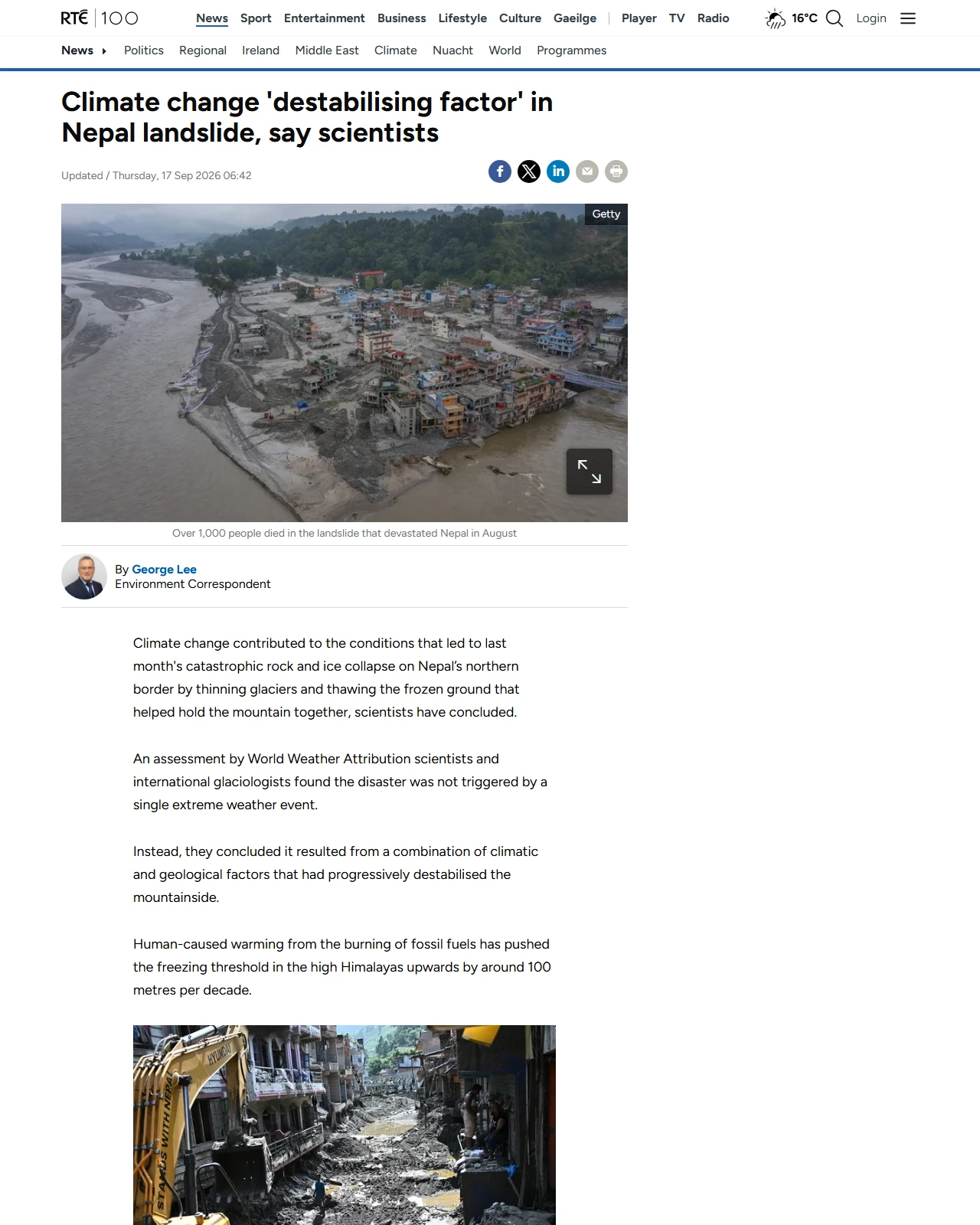
Scientists, including those from World Weather Attribution, assessed a catastrophic rock and ice collapse in Nepal's northern border region and concluded that human-caused climate change contributed to the disaster by thinning glaciers and thawing permafrost that had stabilized the mountainside. The collapse was not triggered by a single extreme weather event but resulted from a combination of climatic and geological factors.
1 of 6 articles were readable. Headline only, no body text retrieved, for: climatechangenews.com, euronews.com, mezha.net, news.inbox.eu, ua.news. Nothing below is drawn from those outlets beyond their headline.
Who reported it
- climatechangenews.comUNCLASSIFIED
- euronews.comUNCLASSIFIED
- news.inbox.euUNCLASSIFIED
- mezha.netUNCLASSIFIED
- rte.iePUBLIC
- ua.newsUNCLASSIFIED
References
- climatechangenews.comNepal flood destruction shows "limits to adaptation", scientists sayScreenshot as publishedOriginalcaptured 2026-09-17T12:00:05
- euronews.comClimate change was key factor in deadly Nepal-China flood, scientists sayScreenshot as publishedOriginalcaptured 2026-09-17T12:00:05
- mezha.netScientists say climate change may have intensified catastrophic Nepal flood | Ukraine news - #MezhaScreenshot as publishedOriginalcaptured 2026-09-17T12:00:05
- news.inbox.euClimate change was key factor in deadly Nepal-China flood, scientists sayScreenshot as publishedOriginalcaptured 2026-09-17T12:00:05
- rte.ieClimate change 'destabilising factor' in Nepal landslideScreenshot as publishedOriginalcaptured 2026-09-17T12:00:05
- ua.newsScientists say Nepal flood exposed limits of adaptation — Climate Home NewsScreenshot as publishedOriginalcaptured 2026-09-17T12:00:05
Reported unevenly
- Type of event: whether the disaster is characterized as a 'flood', a 'landslide', or a 'rock and ice collapse'stated by climatechangenews.com (flood), euronews.com (flood), mezha.net (flood), news.inbox.eu (flood), rte.ie (rock and ice collapse/landslide), ua.news (flood)
Not yet confirmed against a primary source
- Confirm the geography and nature of the event: rte.ie describes 'a catastrophic rock and ice collapse on Nepal's northern border' while other outlets refer to 'Nepal-China flood' or 'Nepal flood.' Are these descriptions of the same event or different ones? Cross-reference against World Weather Attribution's original assessment.